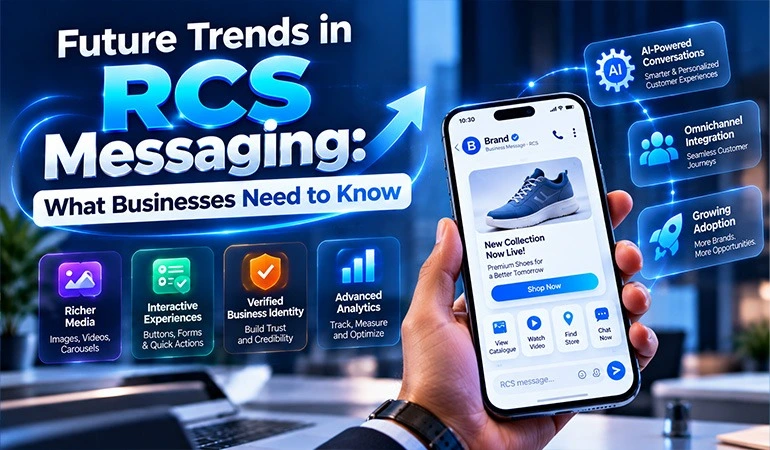
RCS messaging is changing the way businesses communicate with customers through mobile messaging. Unlike traditional SMS RCS allows brands to use images, videos, rich cards, suggested replies buttons and interactive actions within the messaging experience.
As customers expect faster and more convenient communication businesses are looking beyond basic text messages. RCS Business Messaging gives them an opportunity to create branded conversations that can support marketing sales, customer service and transactions.
For businesses exploring advanced messaging solutions NationalBulkSMS can help make RCS messaging part of a broader customer communication strategy.
What Is RCS Messaging?
RCS stands for Rich Communication Services. It is a messaging standard designed to provide a richer experience than conventional SMS.
RCS Business Messaging enables brands to communicate through branded business profiles and interactive messages. Depending on the implementation businesses can use rich media suggested actions, suggested replies and conversational features.
Google's current RCS Business Messaging documentation also highlights delivery and read events, user interaction events and unsubscribe handling giving businesses more visibility into how customers interact with messages.
Why RCS Messaging Is Becoming Important
SMS remains useful because of its simplicity and broad reach. However, text-only communication can make some business interactions feel limited.
RCS addresses this limitation by bringing richer content and interactive actions into the messaging environment.
Businesses can use RCS to:
- Present products with images and descriptions
- Share promotional offers
- Provide appointment information
- Send order and delivery updates
- Guide customers through simple actions
- Collect customer responses
- Connect customers with support teams
- Build branded conversations
This makes messaging useful across more stages of the customer journey.
Future Trends in RCS Messaging
1. More Interactive Customer Conversations
One of the biggest developments in RCS will be the move from one-way notifications toward interactive conversations.
Instead of sending a message such as "Your appointment is tomorrow," a business can provide options such as "Confirm Appointment," "Change Time," or "Contact Support."
RCS already supports suggested replies and actions including opening URLs, viewing locations, making calls and creating calendar events.
This reduces the number of steps customers need to take.
2. AI-Powered RCS Conversations
Artificial intelligence is expected to play a larger role in business messaging.
AI-powered RCS agents can help answer common questions, identify customer intent, recommend products and guide users toward suitable actions.
For example a customer could ask about a product through an RCS conversation. An AI-enabled agent could provide product information, answer follow-up questions and direct the customer toward purchase or human assistance.
The important shift is from sending messages to managing conversations.
3. Rich Media Will Become More Common
Text alone is often insufficient when a business needs to explain or promote something visually.
RCS supports richer formats such as images, videos, GIFs, rich cards and carousels. Google documentation shows that rich cards can combine titles, descriptions, images and suggested responses or actions.
This can be particularly useful for retail travel education, real estate banking, hospitality and automobile businesses.
4. Personalized Messaging
Future RCS campaigns are likely to become more personalized.
Businesses can use customer information and campaign data to create messages based on previous interactions purchase history preferences location or customer stage.
For example, an online retailer could send one customer a product recommendation while another receives an order update.
Personalization should remain relevant and useful. Sending excessive promotional messages can damage customer trust and increase opt-outs.
5. Better Measurement and Analytics
Measurement is another important area where RCS can add value.
Businesses can track events such as delivery message reads, suggested-action interactions and user responses through RCS Business Messaging.
This gives marketers more information for evaluating campaigns.
Instead of measuring communication only through message delivery, businesses can examine how customers interact with different messages and actions.
6. Stronger Brand Verification
Trust will become increasingly important as business messaging grows.
RCS Business Messaging includes brand verification processes designed to confirm that an authorized representative is managing the business agent. Once launched and verified Google Messages can display a verification checkmark for the agent.
Google has also announced upcoming verification-token requirements for certain carrier launches. Businesses planning long-term RCS deployments should therefore pay attention to changing launch and verification requirements.
7. Integration With Business Systems
RCS will increasingly connect with CRM systems, customer databases, ecommerce platforms, booking systems, payment journeys and support software.
This can allow a business to trigger the right message based on an event.
For example:
- An order system can trigger shipping updates.
- A CRM can initiate follow-up messages.
- A booking platform can send appointment reminders.
- A support system can provide status updates.
- An ecommerce platform can send product-related communication.
This makes messaging part of the business workflow rather than a separate marketing activity.
8. RCS and Digital Wallet Experiences
RCS can also work alongside other digital services.
Google provides an example where RCS Business Messaging can be integrated with Google Wallet for boarding-pass experiences. A customer can complete a check-in flow through messaging and add the boarding pass to Wallet.
Similar connected experiences can become useful for tickets appointments, loyalty programs, travel and event management.
Use Case 1: Ecommerce and Retail
An ecommerce company can use RCS to send a product card containing an image, product information price and action buttons.
A customer can select an option directly from the conversation and continue to the relevant page.
After purchase the same messaging channel can be used for order confirmation, shipping updates, delivery notifications and customer support.
This creates a connected communication journey instead of separate messages for every stage.
Use Case 2: Banking and Financial Services
Banks and financial service providers can use RCS for customer notifications, service requests, appointment reminders and educational communication.
For example a customer may receive a notification about an upcoming appointment with options to confirm reschedule or contact the branch.
For sensitive financial communication businesses must follow applicable security privacy, regulatory and carrier requirements. RCS should complement established secure banking systems rather than replace them.
Case Study 1: Subway's RCS Promotion
An early RCS example involved Subway which used richer promotional messages containing detailed images.
According to a Harvard Business Review Analytic Services report sponsored by Google, Subway recorded a 144% increase in coupon redemption compared with the same promotion delivered through SMS.
The example demonstrates how a richer presentation can change the way customers interact with a promotional message.
Case Study 2: RCS for Customer Transactions
Google has also documented early RCS examples involving companies such as Citi and Overstock.
The examples included customer-focused interactions such as checking account information, receiving purchase and delivery updates, rating purchases and connecting with customer service.
These examples show how RCS can extend beyond promotional campaigns and become part of everyday customer service and transactional communication.
How Businesses Can Prepare for the Future of RCS
Businesses planning to adopt RCS should begin with practical communication requirements rather than simply adding another messaging channel.
A good starting point is to identify:
- Which customer journeys need faster communication
- Which SMS campaigns could benefit from rich media
- Where customers need quick actions or replies
- Which business systems should connect with messaging
- What customer data can be used responsibly
- How campaign performance will be measured
Brands should also prepare their verification content consent and compliance processes before launching large-scale campaigns.
RCS Messaging With NationalBulkSMS
For businesses looking to modernize customer communication NationalBulkSMS can be part of a multi-channel messaging strategy that includes RCS Bulk SMS WhatsApp Voice SMS and other business communication solutions.
RCS can be especially useful when a business needs more than a simple text message. Rich media branded communication interactive actions and measurable customer interactions can help create more useful messaging experiences.
The future of business messaging is likely to involve multiple channels working together. RCS can provide the richer conversational layer while SMS and other channels continue serving their respective communication needs.
FAQs
The future of RCS is expected to focus on richer media interactive conversations personalization, AI-assisted communication, improved analytics business-system integration and stronger sender verification.
RCS provides capabilities that traditional SMS does not including rich media suggested actions, branded sender experiences and interaction data. SMS remains useful for simple and broad text-based communication so businesses may use both depending on the campaign.
Yes. Businesses can integrate AI-powered conversational systems with RCS to handle customer questions, provide recommendations, collect information and guide users toward suitable actions.
Retail, ecommerce, banking, travel, hospitality, healthcare, education, real estate, automotive, logistics and customer support businesses can explore RCS for suitable communication journeys.
Businesses should identify suitable use cases, prepare their brand and messaging content, review verification and compliance requirements and select a reliable messaging provider or RCS integration partner such as NationalBulkSMS.


