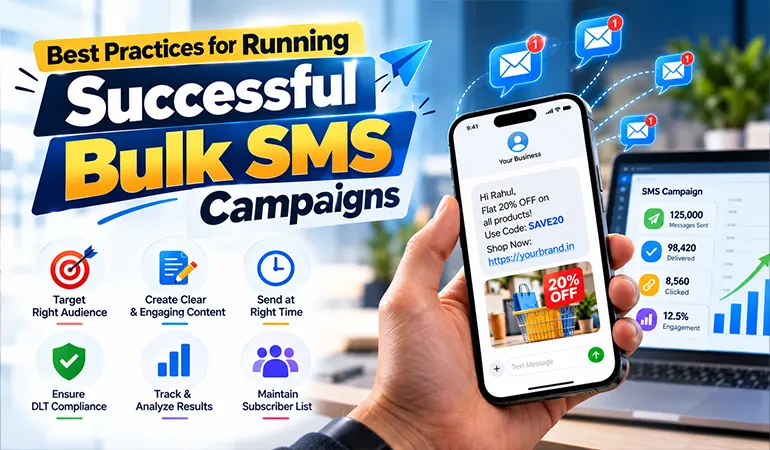
Bulk SMS remains a useful communication channel for businesses that need to send timely messages to customers. From appointment reminders and order updates to promotional offers and payment alerts, SMS helps companies reach people directly on their mobile phones.
However, sending a large number of messages does not automatically produce good results. A successful campaign requires the right audience, a clear message, suitable timing, reliable delivery, and proper performance tracking.
National Bulk SMS helps businesses explore messaging solutions for customer communication, promotional campaigns, and transactional notifications. By following the right practices, businesses can make their SMS campaigns more relevant, measurable, and useful for customers.
What Is a Bulk SMS Campaign?
A bulk SMS campaign involves sending text messages to a selected group of mobile numbers through an SMS platform. Businesses can use it to communicate promotions, announcements, reminders, alerts, and other relevant information.
Unlike communication channels that depend on customers checking an application or email inbox, SMS messages arrive in the phone's messaging inbox, subject to network availability, device settings, and delivery conditions.
Common uses of bulk SMS include:
- Promoting seasonal discounts and special offers.
- Sending order confirmations and delivery updates.
- Sharing appointment reminders and service notifications.
- Sending payment reminders and account alerts.
- Announcing new products, services, or business events.
- Informing customers about important changes.
The purpose of a campaign should determine its message, audience, sending schedule, and success measures.
Best Practices for Running Successful Bulk SMS Campaigns
1. Define a Clear Campaign Objective
Every SMS campaign should begin with a specific business goal. Without a clear objective, it becomes difficult to decide what to send, whom to target, and how to measure the results.
Before launching a campaign, decide whether you want to generate enquiries, increase sales, remind customers about appointments, or improve repeat purchases.
For example, a retail business promoting a weekend sale may focus on store visits and purchases. A coaching institute may measure enquiries and registrations for an upcoming course.
Set measurable targets wherever possible. Depending on the campaign, these might include clicks, qualified enquiries, completed bookings, or sales.
2. Build a Permission-Based Contact List
A relevant contact list is one of the most important parts of a successful bulk SMS campaign. Sending messages to people who have no interest in your business can waste money and increase complaints.
Collect mobile numbers through legitimate sources, such as website enquiry forms, customer registrations, checkout processes, or explicit subscriptions.
Follow these practices:
- Obtain the required consent before sending promotional messages.
- Explain what kind of communication subscribers can expect.
- Keep contact records accurate and updated.
- Remove invalid numbers and honour opt-out requests.
- Never purchase or use unverified contact lists for unsolicited promotions.
A permission-based list helps businesses communicate with people who have a genuine reason to receive their messages.
3. Segment Your Audience
Sending the same message to every customer may reduce its relevance. Audience segmentation allows businesses to group contacts according to their interests, previous purchases, location, or stage in the customer journey.
For instance, an educational institute can separate prospective students, enrolled students, and former students. Each group needs different information.
Useful segmentation methods include:
- Location: Share offers relevant to a particular city or branch.
- Purchase history: Recommend related products or services.
- Customer status: Distinguish new customers from returning customers.
- Interests: Send updates that match customer preferences.
- Engagement: Identify subscribers who respond to previous campaigns.
Smaller, well-defined audience groups often make campaign personalisation easier and improve the relevance of each message.
4. Write Short, Clear, and Useful Messages
SMS works best when the recipient can understand the message quickly. Long introductions, vague offers, and unnecessary information can make customers lose interest.
A good SMS should explain the main benefit and tell the recipient what to do next.
For example:
"Weekend Sale! Get 20% off selected products at ABC Store until Sunday. View offers: [link]"
This message communicates the offer, deadline, and next step without unnecessary detail.
When writing your campaign copy:
- Put the most important information first.
- Use simple and familiar language.
- Mention the offer or purpose clearly.
- Include a relevant call to action.
- Avoid misleading claims and excessive capital letters.
- Use personalisation only when the underlying data is accurate.
Before sending, read the message as if you were receiving it for the first time. If its purpose is unclear, revise it.
5. Use the Right SMS Route and Sender Identity
Businesses should select the appropriate SMS service according to their communication needs. Promotional messages, service-related messages, and transactional alerts may have different regulatory and routing requirements.
In India, businesses must follow applicable Telecom Regulatory Authority of India (TRAI) rules and relevant telecom operator requirements, including registration, consent, approved headers, content templates, and preference checks where applicable.
Work with a provider that can explain the applicable requirements and help you configure the campaign correctly.
National Bulk SMS can be considered when evaluating bulk messaging services, SMS delivery reporting, and campaign management requirements. Confirm the specific features, onboarding support, and compliance processes available for your account before starting.
6. Choose the Right Time to Send Messages
The timing of an SMS campaign affects whether recipients can read and act on it. A message sent at an inconvenient time may be ignored or create a poor customer experience.
Consider the purpose of the message and the recipient's normal schedule.
- Retail offers may perform better when customers have time to browse.
- Appointment reminders should arrive sufficiently early for customers to prepare.
- Payment reminders should allow enough time before the due date.
- Event notifications should provide useful information before the event begins.
For promotional messages in India, follow the applicable permitted time windows and subscriber preferences. Avoid treating transactional urgency as permission to send unrestricted promotional messages.
When appropriate, test different permitted sending times and compare the results.
7. Include a Strong Call to Action
A call to action tells the customer what to do after reading the SMS. Without one, even an interesting message may fail to generate a meaningful response.
Depending on the campaign objective, a call to action could invite customers to:
- Visit a website.
- Register for a webinar.
- Book an appointment.
- Redeem an offer.
- Contact the sales team.
- Complete a pending payment.
Use a clear and relevant destination. If the SMS includes a link, make sure it opens correctly on mobile devices and takes users directly to the promised information.
Avoid sending customers to a generic homepage when a dedicated offer or registration page would serve them better.
8. Personalise Messages Where Appropriate
Personalisation can make a message more relevant when it reflects genuine customer information. For example, a business may mention a customer's first name, upcoming appointment, or order status.
However, personalisation should serve a clear purpose. Adding a name to every promotional message does not automatically improve results.
Before sending personalised campaigns, check that customer records are accurate and that personal information is handled responsibly.
Never expose sensitive details in messages that could be visible on a shared or locked phone screen.
9. Test Your Campaign Before Sending It
A simple mistake in a large SMS campaign can affect thousands of recipients. Testing helps identify problems before they become expensive.
Check the following points before launch:
- Message spelling, grammar, and factual accuracy.
- Links, landing pages, and contact details.
- Sender identity and approved message content.
- Personalisation fields and character encoding.
- Audience selection and duplicate contacts.
- Delivery configuration and campaign schedule.
Send a test message to authorised internal recipients first. Review how it appears on different devices and networks when practical.
For larger campaigns, consider a limited initial send before expanding to the full eligible audience.
10. Monitor Delivery and Campaign Performance
Sending a campaign is only the beginning. Performance data helps marketers understand whether messages are reaching recipients and producing the intended business outcome.
Useful metrics include:
- Delivery rate: The proportion of submitted messages reported as delivered.
- Click-through rate: The proportion of recipients who click a tracked link, using a clearly defined calculation.
- Conversion rate: The proportion of recipients who complete the intended action.
- Cost per conversion: The campaign cost divided by the number of attributed conversions.
- Opt-out rate: The proportion of recipients who unsubscribe or withdraw permission.
- Complaint rate: The frequency of negative responses or reported unwanted messages.
Delivery reports do not guarantee that a person has read a message. Similarly, link clicks do not necessarily indicate a sale.
Use suitable tracking links, landing-page analytics, and CRM records to connect campaign activity with business outcomes.
11. Keep Messages Relevant and Respect Customer Preferences
Repeated messages about unrelated offers can cause frustration and increase unsubscribes. Campaign frequency should reflect customer expectations and the value of the information being shared.
Maintain a reasonable sending schedule, remove opted-out contacts promptly, and avoid sending the same promotion repeatedly without a clear reason.
For promotional communication, provide an effective opt-out mechanism where required. Review customer feedback and complaints regularly, then adjust your messaging strategy.
A good campaign respects the recipient's time and privacy while giving them a clear reason to engage.
Two Practical Use Cases of Bulk SMS Campaigns
Use Case 1: Bulk SMS for Educational Institutes
A coaching institute wants to increase registrations for an upcoming digital marketing course. It has collected contact details from people who enquired about its programmes and obtained the necessary permissions for promotional communication.
The institute segments these contacts according to course interest and sends a concise message explaining the next batch date, course details, and registration link.
It then measures registrations, qualified enquiries, and cost per enrolment. These results help the team decide whether to improve the offer, landing page, or audience selection for its next campaign.
Use Case 2: Bulk SMS for E-commerce Businesses
An online store wants to reduce missed deliveries and keep customers informed about their orders.
It uses suitable transactional messaging workflows to send order confirmations, dispatch updates, and delivery notifications. Customers receive useful information without needing to contact customer support for routine updates.
The business monitors delivery status, customer support queries, and failed delivery rates to assess whether the communication process is helping customers.
The exact message route and compliance requirements depend on the message purpose and applicable regulations.
Two Case Studies on Successful Bulk SMS Campaigns
The following case studies are illustrative scenarios showing how businesses can apply these practices. They are not verified client results or claims of measured performance.
Case Study 1: A Retail Store Improves Promotional Campaign Planning
Challenge: A retail store sends the same discount message to its entire customer list. Engagement is inconsistent, and the team cannot identify which offers lead to purchases.
Strategy: The store divides its eligible contacts into groups based on previous purchases and stated interests. It prepares separate offers, checks all links, and schedules messages within the applicable permitted window.
Measurement: The marketing team tracks delivered messages, unique link clicks, coupon redemptions, attributed purchases, and opt-outs.
Learning: Segmenting customers and tracking completed purchases gives the business a better basis for improving future campaigns. Actual performance must be established from campaign data.
Case Study 2: A Service Company Improves Appointment Reminders
Challenge: A service company experiences missed appointments and spends considerable time making manual reminder calls.
Strategy: The company introduces a reminder workflow using suitable messaging services. Customers receive appointment details and instructions at an appropriate time, with an easy way to contact the business if they need to reschedule.
Measurement: The team compares missed appointments, rescheduling requests, customer support workload, and messaging costs before and after implementation.
Learning: Timely, relevant notifications can help customers remember appointments and make service operations easier to manage. The size of any improvement depends on the customer base and implementation.
How National Bulk SMS Can Support Business Communication
National Bulk SMS provides a service category businesses can evaluate when planning promotional messaging, customer notifications, and other SMS communication workflows.
Before choosing a bulk SMS provider, consider the following:
- Availability of relevant SMS services and campaign management features.
- Delivery reports and message status visibility.
- Support for required sender registration and approved templates.
- Integration options for websites, applications, and CRM systems.
- Pricing, route availability, and support arrangements.
- Processes for managing consent, opt-outs, and contact records.
The right service should fit your campaign requirements and support compliant, measurable communication. Businesses should verify current features, pricing, and service conditions directly with National Bulk SMS before making a purchase decision.
FAQs About Bulk SMS Campaigns
A successful campaign has a clear objective, a relevant permission-based audience, concise message copy, suitable timing, and a useful call to action. It also measures meaningful results such as qualified enquiries, purchases, bookings, or completed registrations. Delivery volume alone is not a reliable measure of business success.
Keep the message as short as possible while including all essential information. A standard SMS commonly supports 160 GSM-7 characters in one segment, while Unicode messages often support 70 characters. Longer messages may be split into concatenated segments with lower per-segment limits, which can affect billing. Actual limits depend on encoding and provider configuration.
The best time depends on the message's purpose and customer expectations. Promotional messages should be sent within applicable permitted hours, while reminders should arrive early enough to be useful. Test different permitted times when appropriate, and consider delivery, response, conversion, and opt-out data before changing your schedule.
Businesses must follow applicable Indian telecom regulations, consent requirements, subscriber preferences, and message classification rules. Promotional messages generally require the appropriate consent and must comply with relevant registration and preference-checking procedures. Requirements can differ by message category, so verify the current rules with your SMS provider and the relevant regulatory guidance before launching a campaign.
Businesses can review delivery reports, tracked link clicks, conversions, cost per conversion, opt-outs, and complaints. Use consistent definitions for each metric and connect SMS activity with website analytics or CRM data where possible. This helps distinguish messages that were delivered from campaigns that actually generated sales, bookings, or qualified enquiries.


