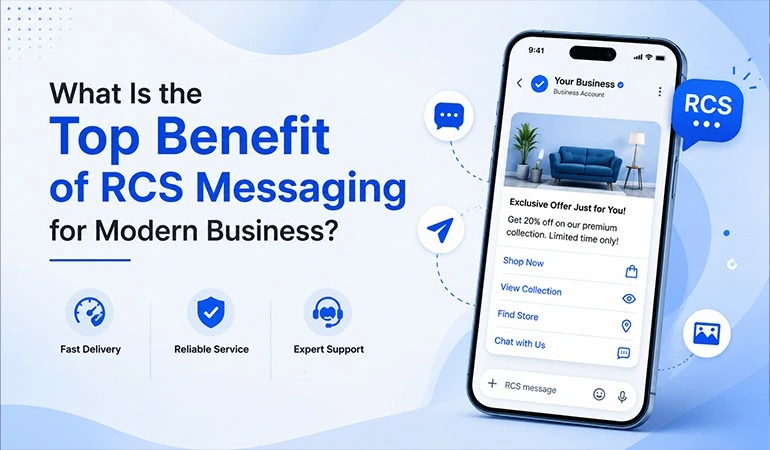
Rich Communication Services, commonly known as RCS Messaging, is changing the way businesses communicate with customers through mobile phones. It combines the reach of traditional SMS with interactive features such as images, buttons, product cards, suggested replies and branded conversations.
For modern businesses, the top benefit of RCS Messaging is higher customer engagement through interactive and personalized communication. Instead of sending a plain text message, companies can create a richer conversation that helps customers understand an offer, take action, or get support directly from their messaging app.
For businesses using communication solutions from National Bulk SMS, RCS can become an important channel for improving customer interaction while keeping messaging simple and mobile-friendly.
What Is RCS Messaging?
RCS Messaging is an upgraded form of mobile messaging designed to provide a more interactive communication experience. It allows businesses to send messages containing rich media and interactive elements.
Depending on device, carrier and regional support, customers may receive features such as:
- Business name and verified branding
- Images and videos
- Product or service cards
- Clickable buttons
- Suggested replies
- Location sharing
- Rich links
- Appointment or booking actions
- Customer support conversations
This makes RCS particularly useful for businesses that want to move beyond basic text-based communication.
What Is the Top Benefit of RCS Messaging?
The biggest advantage of RCS Messaging is better customer engagement.
A traditional SMS generally contains text and a link. RCS gives customers more information and more ways to interact within the same message. A customer can view an offer, select an option, visit a product page, or start a conversation without dealing with a long and complicated message.
This interactive experience can help businesses:
- Capture attention more effectively
- Explain products and services clearly
- Increase response opportunities
- Make customer journeys easier
- Strengthen brand recognition
- Encourage faster action
The result is a communication channel that feels closer to a digital conversation than a conventional SMS.
How RCS Improves Business Communication
1. Creates a Richer Customer Experience
Plain text can communicate information, but visual content can communicate it faster. RCS allows businesses to combine text, images, buttons and other interactive elements in one message.
For example, an online store can display a product image, price, description and a "Buy Now" button in the same conversation.
2. Makes Messages More Action-Oriented
A customer should not have to read a long message and figure out what to do next. RCS can present clear actions such as "Shop Now," "Book Appointment," "Track Order," or "Talk to Support."
This reduces unnecessary steps between receiving a message and taking action.
3. Supports Better Brand Visibility
RCS can display business branding within supported messaging environments. A recognizable business identity can make communication easier to identify and can help customers distinguish legitimate business messages from unknown senders.
For companies sending frequent customer communications, this can contribute to a more consistent messaging experience.
RCS Messaging Use Cases
Use Case 1: E-commerce Product Promotions
An e-commerce company can use RCS to promote new products with images, short descriptions, prices and direct action buttons.
Instead of sending:
"New shoes available. Visit our website to shop now."
The company can create a richer message showing the product and giving customers a direct option to view or purchase it.
This approach can make promotional communication easier to understand and more engaging.
Use Case 2: Appointment and Service Reminders
Healthcare providers, salons, automobile service centers and other appointment-based businesses can use RCS for reminders.
A message can include the appointment date, time, location and buttons such as "Confirm," "Reschedule," or "Contact Us."
Customers can respond quickly without searching through previous messages or manually contacting the business.
RCS Messaging Case Studies
Case Study 1: Online Retail Business
Consider an online fashion retailer that previously used standard SMS to promote products. Its messages contained short promotional text and a website link.
After introducing RCS, the retailer could showcase product images, descriptions, promotional pricing and action buttons in the message itself.
The communication became easier to understand because customers could see the product before deciding whether to click. The business also gained more opportunities to guide customers toward specific products rather than sending them to a general homepage.
The key lesson is simple: when customers can see and interact with an offer immediately, the communication journey becomes more direct.
Case Study 2: Automobile Service Center
Imagine an automobile service center that relies on SMS reminders for scheduled maintenance.
Instead of sending only a text reminder, the company can use RCS to provide appointment details along with options such as confirmation, rescheduling, location directions and customer support.
This reduces the number of separate interactions required from both the customer and the service team. Staff can spend less time handling routine confirmation requests while customers get a clearer experience.
RCS vs Traditional SMS
Traditional SMS remains useful because it is simple, widely understood and suitable for many transactional messages. However, it offers limited room for visual and interactive communication.
RCS adds richer functionality to the messaging experience.
Businesses can use traditional SMS for straightforward alerts, OTPs and essential notifications, while RCS can be considered for marketing campaigns, customer engagement, product discovery, bookings and support.
The right choice depends on the communication objective, audience, device support and message type.
Why Businesses Should Consider RCS Messaging
Modern customers receive a large number of digital messages every day. Businesses therefore need communication that is clear, useful and easy to act upon.
RCS can help by bringing several communication elements into one conversation.
With a suitable messaging strategy, businesses can use RCS to:
- Promote products and services
- Share offers and announcements
- Guide customers through purchases
- Confirm appointments
- Provide order updates
- Support customer queries
- Share rich promotional content
- Improve the overall mobile communication experience
National Bulk SMS can help businesses explore messaging solutions suited to their communication requirements, including modern channels such as RCS.
Frequently Asked Questions About RCS Messaging
RCS Messaging is used for marketing, customer support, product promotions, appointment reminders, order communication and other business interactions that can benefit from rich and interactive content.
RCS offers more interactive features than traditional SMS, including images, buttons, branding and rich content. SMS remains valuable for simple communication and situations where broad compatibility is important.
Yes. Interactive content, visual elements and direct action buttons can make business messages easier to understand and respond to, which can support stronger customer engagement.
Yes. RCS can be useful for small businesses as well as larger organizations. Retailers, restaurants, educational institutions, service providers and local businesses can use it for promotions, reminders, bookings and customer communication.
National Bulk SMS provides business messaging solutions designed to help organizations communicate with customers through modern messaging channels. Businesses can evaluate RCS based on their audience, communication goals and campaign requirements.


