Customers expect businesses to communicate quickly, clearly and conveniently. They want order updates on time, helpful reminders, easy access to offers and a simple way to contact a company when they need assistance. Traditional SMS still serves many of these needs, but businesses are looking for richer ways to communicate with their customers.
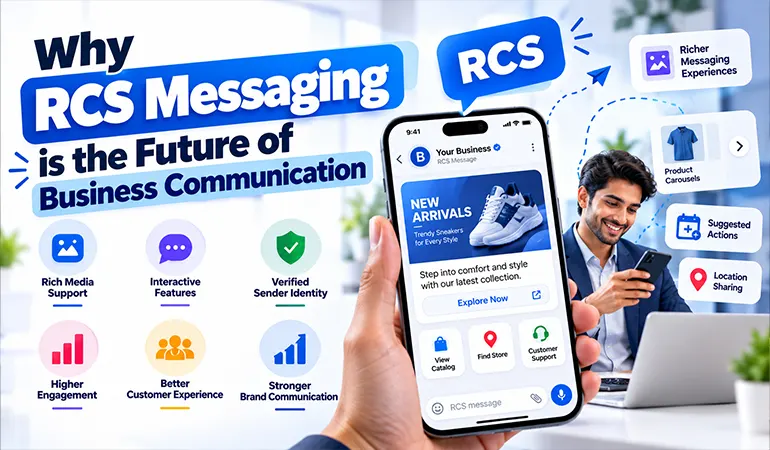
Rich Communication Services (RCS) offers one such option. It brings features such as branded messaging, images, suggested replies and interactive buttons to supported messaging experiences. Instead of receiving only a plain text message, customers can interact with a business directly through a more visual conversation.
For businesses exploring better customer communication, National Bulk SMS recognises the importance of understanding how RCS can support marketing, customer service and transactional messaging.
What Is RCS Messaging?
RCS stands for Rich Communication Services. It is a messaging standard designed to improve the traditional text messaging experience by adding richer content and interactive features.
Depending on the device, messaging app, carrier and service configuration, RCS can support features such as:
- Business names and branded sender profiles.
- Images, banners and other rich media.
- Interactive buttons and suggested replies.
- Delivery and read indicators.
- Two-way conversations with customers.
- Rich product details and promotional content.
For example, a delivery company can send an order update with a tracking button. A customer may be able to open the tracking page directly from the message instead of searching for a separate link.
RCS availability and functionality vary by market and device. Businesses should check compatibility before planning a campaign.
Why RCS Messaging Is Becoming Important for Businesses
1. A More Engaging Customer Experience
Plain text messages are useful for short notifications, but they offer limited space for visual communication. RCS can present information through images, branded layouts and interactive elements where supported.
A retailer, for instance, can showcase a new collection and provide buttons for viewing products or contacting customer support. This gives customers a clearer path from receiving a message to taking action.
2. Better Brand Recognition
Customers receive messages from many businesses every day. Recognising the sender helps them understand who is contacting them and whether the message is relevant.
Eligible RCS business messaging implementations can display a verified business identity, including a business name, logo and other profile details. Verification requirements depend on the platform and provider.
For companies using National Bulk SMS to explore business messaging solutions, branded communication can be an important part of building a consistent customer experience.
3. Interactive Communication Instead of One-Way Messages
Traditional SMS usually directs customers to reply with text or open a link. RCS can offer suggested replies and action buttons that make common tasks easier.
Businesses may use interactive features to help customers:
- Confirm an appointment.
- View an order status.
- Browse a product catalogue.
- Request assistance.
- Choose from available service options.
These features can reduce unnecessary steps and make routine communication easier to manage.
4. More Useful Marketing Campaigns
RCS gives marketing teams more ways to present offers and product information. Instead of relying entirely on a short text message, businesses can use supported rich media to explain an offer and guide the customer towards a relevant action.
Common applications include festive promotions, product launches, abandoned cart reminders, membership offers and personalised recommendations.
The aim should be to send useful messages to the right audience. Frequent, irrelevant promotions can frustrate customers regardless of the messaging technology.
5. Improved Customer Support
Customer service teams often handle repetitive questions about deliveries, bookings, payments and service requests. RCS can help simplify these interactions by presenting relevant options within the messaging experience.
For example, a customer who receives an appointment reminder may be able to confirm or request a change through a supported interactive message.
More complex requests may still require a website, app, or customer service representative. RCS should be part of a wider support process rather than the only channel available.
6. A More Informative Messaging Experience
Depending on the implementation, RCS can provide delivery information and read indicators that help businesses understand message status. These signals can offer more context than a basic SMS delivery report.
However, delivery does not guarantee that a customer has read a message or completed the intended action. Businesses should measure meaningful outcomes such as confirmed bookings, completed purchases and resolved support requests.
RCS Messaging vs Traditional SMS
Understanding the Main Differences
Traditional SMS remains useful because it works across a broad range of mobile devices and supports concise alerts, verification codes and reminders.
RCS adds richer presentation and interaction where the recipient's device, messaging service and network support it.
The key differences include:
- Content: SMS primarily carries text, while RCS can support rich media.
- Branding: RCS business messaging can display branded sender details when configured and approved.
- Interaction: RCS can include suggested replies and action buttons.
- Reporting: RCS may offer additional message-status information.
- Compatibility: SMS has broader reach, while RCS availability depends on supported environments.
- Cost: Pricing varies by provider, message type, destination and campaign arrangement.
Many businesses will benefit from using both channels. RCS can serve compatible customers, while SMS can provide a fallback when RCS is unavailable or unsuitable.
Industries That Can Benefit From RCS Messaging
E-commerce and Retail
Online stores can use RCS to share product recommendations, order updates, sale announcements and delivery notifications. Interactive buttons can help customers view products or track purchases.
Banking and Financial Services
Financial institutions may use supported business messaging for service notifications, account-related communication and customer assistance. Sensitive information requires careful handling and authentication or regulated communications must follow the relevant security and compliance requirements.
Healthcare
Hospitals and clinics can send appointment reminders, share preparation instructions and offer options for confirming visits. Personal health information should be handled according to applicable privacy rules and customer consent requirements.
Travel and Hospitality
Airlines, hotels and travel companies can share booking confirmations, itinerary updates, check-in information and service options through suitable messaging workflows.
Education and Training
Educational institutions can use RCS to share admission updates, course information, counselling schedules and registration reminders. Interactive options may help prospective students request details or arrange a call.
How National Bulk SMS Can Support Business Messaging
National Bulk SMS operates in the business messaging space, where reliable communication, campaign management and customer reach matter to organisations of different sizes.
Businesses considering RCS should evaluate how the channel fits their existing communication systems and customer requirements.
Important points to consider include:
- Audience compatibility: Understand which customers can receive RCS messages.
- Message design: Keep the content clear, relevant and easy to navigate.
- Integration: Check whether messaging can connect with existing CRM, order management, or marketing systems.
- Reporting: Measure delivery, customer actions, conversions and campaign costs.
- Fallback options: Plan for customers who cannot receive RCS messages.
- Compliance: Follow applicable consent, privacy and messaging requirements.
Before selecting an RCS service, businesses should confirm the provider's current availability, supported features, pricing, integration options and reporting capabilities.
Practical Use Cases of RCS Messaging
Use Case 1: Recovering Abandoned Shopping Carts
An online store notices that many visitors add products to their carts but leave before completing their purchases.
The marketing team sends eligible customers an RCS reminder featuring the selected product, a short message and a button to return to checkout.
The team measures completed purchases, revenue, opt-outs and campaign costs. If RCS is unavailable for some recipients, an appropriate alternative channel can be used.
Use Case 2: Appointment Confirmation for a Service Business
A service company receives a large number of calls from customers who want to confirm or change appointments.
It introduces RCS reminders with options to confirm the booking, request a change, or contact support. Responses are connected to the company's scheduling process where the required integration is available.
This can reduce unnecessary calls and help staff manage appointment changes more efficiently. Actual savings depend on customer adoption and the quality of the workflow.
Case Studies of RCS Messaging in Business Communication
Case Study 1: Retail Customer Engagement
Business challenge: A retail brand wants to make promotional messages more informative and help customers discover products without relying entirely on plain text.
Approach: The brand pilots RCS with a compatible audience. Messages feature approved branding, selected products, concise offers and clear action buttons.
Measurement: The team compares engagement, click-through activity, completed purchases and cost per conversion against a comparable SMS campaign.
Learning: Rich media may make product discovery easier, but results depend on the offer, audience, message design and customer compatibility.
This is an illustrative case study. It does not represent verified results from a named retailer.
Case Study 2: Reducing Missed Appointments
Business challenge: A healthcare clinic spends considerable time contacting patients to confirm appointments and handle schedule changes.
Approach: The clinic tests RCS appointment reminders with confirmation and rescheduling options for eligible patients. Its booking system is updated through an approved integration and an alternative notification method remains available.
Measurement: The clinic tracks confirmation rates, missed appointments, rescheduling activity and staff time spent on reminder calls.
Learning: Interactive reminders can simplify routine communication when they are integrated with an accurate scheduling process and designed to protect patient privacy.
This is an illustrative scenario, not a verified customer result.
Challenges Businesses Should Consider Before Adopting RCS
RCS offers useful capabilities, but businesses should plan for its practical limitations.
- Device and network support: Not every recipient will have access to RCS.
- Implementation: CRM and other system integrations may require technical work.
- Campaign costs: Pricing can differ from standard SMS and should be assessed against campaign value.
- Customer privacy: Businesses must use customer information responsibly and follow applicable laws.
- Content quality: Rich design cannot compensate for irrelevant or misleading messages.
- Fallback planning: Alternative channels are important for maintaining communication reach.
A small pilot campaign can help businesses assess compatibility, customer response and operational requirements before expanding their use of RCS.
FAQs
RCS is a messaging standard that supports richer content and interactive features than traditional SMS on compatible devices and services.
RCS offers more interactive features, while SMS provides broader compatibility. The right choice depends on the audience and communication goal.
No. Availability depends on device support, messaging app, network, region and service configuration.
Yes. Businesses can use supported RCS features for promotions, product discovery, reminders and customer engagement, subject to consent and applicable rules.
Not in every situation. Many businesses should retain SMS as an alternative for recipients who cannot receive RCS messages.


