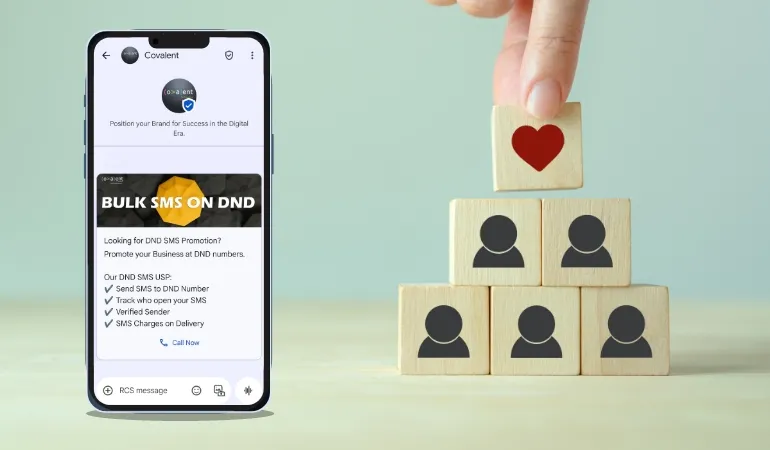
In today's advanced age, when each brand is looking for new ways to communicate with clients, RCS Messaging (Rich Communication Services) has risen as a imperative tool. This technology goes beyond traditional SMS—it offers brands a blend of multimedia, interaction, and reliability. In this blog, we'll explore how brands are using RCS messaging to win customers and what to consider.
What is RCS Messaging?
RCS messaging is a advanced messaging standard that works through your phone's default messaging app (especially on Android). It's not limited to text—it can show the brand name and logo, recordings, pictures, buttons, carousels and more.
Why it's getting to be an attractive choice for brands
1. Brand visibility and believe: RCS can include the brand name, logo, and colors, giving clients confidence in the genuineness of the message.
2. Intuitively experiences: Messages can include buttons like 'Buy Now', 'Track Order', pictures, recordings, etc., allowing clients to take coordinate action.
3. Improved analytics: It appears whether the message was delivered, read, or clicked. Traditional SMS contained very little of this information.
4. No app installation required: Customers don't have to download a new app. They experience the brand within the messaging app they already use.
How brands are using it
E-commerce companies are promoting new products through RCS—by adding images and prices to a message and offering a direct purchase option through a button.
Banks and financial institutions are using RCS to send messages, provide verified brand recognition, and improve customer service.
In the travel and hospitality sector, booking confirmations, flight updates, ticketing, and reminders have become easier through RCS.
Steps to Adopt RCS
Understand your target audience and device support — Ensure your customers are using RCS-enabled devices.
Complete brand verification — Register your brand identity (name, logo, colors) on the RCS platform.
Set up call-to-action (CTA) buttons — such as “Buy,” “Track Order,” “Schedule,” etc.
Implement following and analytics — Track view rates, click-through rates, reaction rates, etc. and move forward your strategy.
Challenges and Precautions
Some devices or systems may not completely support RCS. Thus, it's critical to have an SMS fallback as a backup.
Wrong timing, too much promotional messages, or unclear CTAs can remove users.
Particular consideration must be paid to data security and protection, as messaging can also contain client information.
Proper use of following and analytics is essential—sending alone isn't sufficient.
Conclusion
If your brand is looking for ways to communicate, engage clients, and develop its business, RCS informing can be a viable option. It's not fair about text—it shapes communication, makes intelligent and takes the client travel clearly to the informing app.
FAQs
SMS is a standard content message with restricted interaction. RCS can show a brand's name and logo, send pictures and recordings, incorporate buttons and carousels, and provide read and click information.
No. This depends on whether the device and network support RCS. If a customer's phone or informing app doesn't support RCS, messages can still be conveyed as standard SMS.
Brands to begin with require to enroll with the RCS platform and network partner, set up their brand profile (name, logo, colors), at that point create message content (mixed media + CTA), and at last, set up following and analytics.
A wide variety of applications. Such as product dispatches, promotions, order tracking, booking affirmations, client support communications, overviews, etc.
Yes. Whereas there may be a few regulatory or cost-related challenges at first, RCS's interactivity, improved engagement, and following can offer assistance indeed small brands strengthen their client connections.


