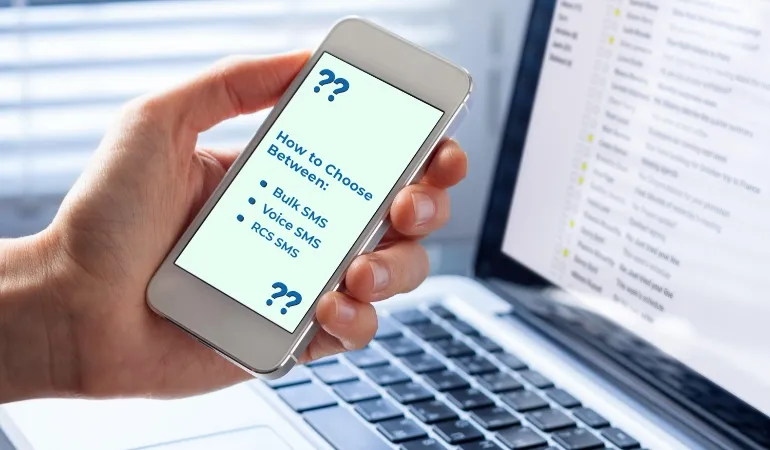
In today’s fast-moving business world, reaching your customers quickly and effectively is everything. The problem? There’s no shortage of messaging options — and that can make it tricky to decide which one’s right for your campaign.
If you’ve been wondering whether Bulk SMS, Voice SMS or RCS is the best fit for your business, you’re not alone. Let’s break each one down, look at what they do best, and figure out how to pick the right tool for the job.
Bulk SMS – The Reliable Workhorse
Bulk SMS is exactly what it sounds like: sending a simple text message to a large group of people at once.
Why it works:
- ● Nearly every phone on the planet can receive SMS — no internet needed.
- ● People are used to it. A short, clear message often gets read within minutes.
- ● It’s cost-effective for large-scale campaigns.
When to use it:
- ● Flash sales or limited-time offers.
- ● OTPs and transactional updates.
- ● Important alerts where speed is critical.
Downside: It’s plain text only. No images, buttons, or fancy formatting. Perfect for quick updates, but not great for showcasing products or interactivity.
Voice SMS – Adding a Human Touch
Voice SMS sends a pre-recorded voice message to the recipient’s phone instead of text.
Why it works:
- ● Adds a personal touch — the tone, pace, and emotion come through.
- ● Great for audiences who may not read texts often.
- ● Works well in local languages for better connection.
When to use it:
- ● Political campaigns or community announcements.
- ● Greetings and personalised thank-you messages.
- ● Customer reminders (appointments, due dates, etc.).
Downside: Less discreet than text. If someone’s in a meeting, they might not listen right away. Also, it’s harder to measure engagement compared to SMS.
RCS – The New-Age Experience
RCS (Rich Communication Services) is the newest player here, combining the reach of SMS with the interactivity of chat apps.
Why it works:
- ● Rich visuals: images, videos, GIFs, and buttons.
- ● Interactive features: order tracking, quick replies, location sharing.
- ● Brand verification for trust and security.
When to use it:
- ● Product launches or catalog sharing.
- ● Booking confirmations with interactive options.
- ● Customer engagement campaigns where design matters.
Downside: Not available on all devices yet — especially iPhones. Also, it costs more than plain SMS.
Choosing the Right One for Your Campaign
Here’s a quick decision guide:
● Speed + Reach + Simplicity = Bulk SMS If you need to reach thousands instantly with a short update, this is your go-to.
● Personal + Emotional Appeal = Voice SMS If tone of voice will help get your message across better than text, choose voice.
● Engagement + Interactivity = RCS If you want your message to look like a mini-website in someone’s inbox, RCS is the winner.
A Real-World Example
Let’s say you run a chain of fitness centers:
● For a flash sale on annual memberships — Bulk SMS works best.
● For reminding existing members about a personal training session — Voice SMS adds warmth.
● For launching a new class schedule with images and sign-up buttons — RCS makes it shine.
Final Thoughts
There’s no single “best” choice here — the right one depends on your audience, your message, and your goal. In many cases, a combination works best: use Bulk SMS for urgent updates, Voice SMS for personal outreach, and RCS for rich, interactive campaigns.
The smarter you match the channel to the message, the better your results will be.
FAQ
Bulk SMS is generally the most affordable. RCS and Voice SMS cost more but offer added features.
Yes — in fact, combining them can increase reach and engagement.
Not yet. It’s widely available on Android but still limited on iPhones.
Yes — you can record customised messages for different customer segments.
Bulk SMS is the fastest and most reliable for urgent mass communication.


